1. Touching Down in Auckland
Stepping out of the plane, I was immediately greeted by the fresh, crisp air that New Zealand is famous for. The scent of the sea mingled with a light breeze and the sight of distant hills signaled the beginning of an immersive journey. Auckland itself, nestled between two harbours and surrounded by dormant volcanic cones, is a fascinating blend of modernity and raw, untouched nature. Yet, what awaited just beyond the city limits promised an even more authentic connection with the land.
With the car rental keys in hand and a meticulously marked map, I was ready to explore the natural wonders that unfold in every direction outside Auckland’s urban frame. From golden beaches and geothermal springs to ancient forests and majestic mountains, each stop became a portal into a different realm of New Zealand’s ecological diversity.
2. Piha Beach: Where the Waves Speak
The first drive westward took me to Piha Beach, only about 45 minutes from central Auckland, yet it felt worlds away. The road curved through the Waitākere Ranges, climbing and dipping through dense native bush, before revealing the breathtaking sight of Piha from the elevation — a black sand beach flanked by rugged cliffs and the iconic Lion Rock rising proudly in the center.
The volcanic sand felt warm underfoot, almost like ash left behind by ancient fires. The surf roared with hypnotic rhythm, and local surfers carved elegant patterns across the waves. Walking along the shore, I spotted shells I’d never seen before — polished by the tide, scattered like nature’s forgotten coins. I hiked up to the base of Lion Rock where I stood and watched the ocean churn from a height, feeling completely insignificant in the best way possible.
A narrow track led inland to the Kitekite Falls, a short 45-minute return walk through native bush and over wooden bridges. The falls thundered down a six-tiered drop into a calm, clear basin where a few locals braved the chilly water for a swim. I sat on a flat rock, shoes off, feet dangling, eyes closed — letting the forest’s soundtrack replace all thought.
3. Waiheke Island: Vineyards, Views, and Vibrance
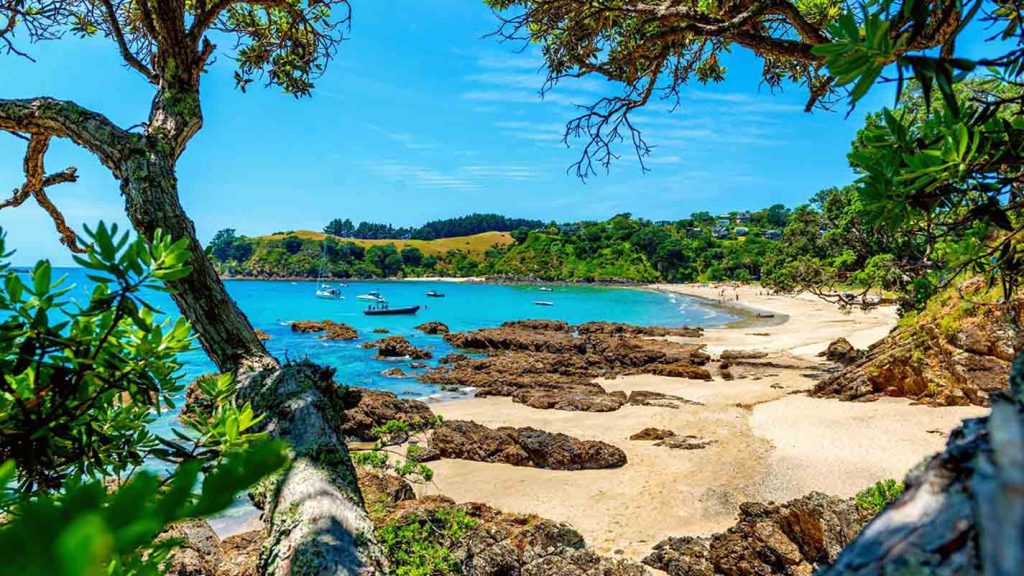
No visit near Auckland would be complete without a ferry ride to Waiheke Island. The 40-minute voyage across the Waitematā Harbour was smooth and peaceful, with seabirds gliding overhead and distant islands dotting the horizon. Disembarking felt like arriving at a coastal retreat where time ran at half speed.
Waiheke is well-known for its vineyards, and I decided to take a slow day hopping between them. At Mudbrick Vineyard, the lavender-lined entrance welcomed me into a stone building that could have been plucked from a Tuscan hilltop. I sampled a glass of Syrah while overlooking the vineyards that sloped gently toward the sea. The air smelled of salt, oak, and wild thyme.
Later, I walked along the Headlands Sculpture Trail, where local art installations merged with views of the Hauraki Gulf. There was a serenity here that no camera could do justice to. I ended the afternoon at Oneroa Beach, letting the golden light of late day soak into my skin as paddle boarders drifted past in silhouette.
4. Rangitoto Island: The Youngest Volcano
Visible from many angles in Auckland, Rangitoto Island had called to me since arrival. I took the morning ferry and landed at the base of a perfectly symmetrical shield volcano that last erupted only 600 years ago — young by geological standards. The terrain was otherworldly, with wide fields of jagged black lava rock surrounded by the stubborn resilience of pōhutukawa trees.
The summit hike took about an hour and a half each way. It was not strenuous, but the volcanic rock demanded careful footing. Along the way, lava caves tempted exploration, their cool interiors echoing with dripping water and mystery. At the summit, a 360-degree view unfolded, showing the full sprawl of Auckland, the nearby islands, and the ocean that seems to embrace everything here. The wind at the top carried whispers of ancient fire.
5. Waitomo Glowworm Caves: Beneath the Earth’s Veil
Heading southward, I made the three-hour drive to Waitomo — a region defined by limestone caves and subterranean marvels. The main attraction, of course, was the Glowworm Caves. The boat ride into the underground river was silent except for the guide’s whispers. Then came the moment when we entered the darkness, and a soft galaxy lit up above. Thousands of glowworms clung to the ceiling, each emitting a bioluminescent glow that reflected off the water’s surface. It was like being suspended in space, drifting under a low sky of blue stars.
In another part of the cave system, I took a guided abseiling adventure. Dropping 35 meters into a cavern known as the “Lost World,” the descent was slow and deliberate. The light above narrowed to a pinhole as the ancient cave embraced us. It smelled of damp earth and limestone, and the quiet was absolute — the kind that fills your ears with the sound of your own heartbeat.
6. Coromandel Peninsula: Cathedral Cove and Hot Water Beach
The Coromandel Peninsula lies to the east, about two and a half hours from Auckland by car, and offers both drama and tranquility in equal measure. I began the journey early to arrive before the tourist rush. The road twisted along the coast, sometimes hugging the sea and at other times slicing through farmland and misty forest.
The first stop was Cathedral Cove, accessible via a 45-minute coastal walk. As I reached the shore, the natural arch of the cove came into view — towering, pale sandstone sculpted by time and tide. The beach here was serene, the surf gentle, and the sun bright but never harsh. I walked through the arch, letting the shadow cool me briefly before stepping into the sunlight again, feeling like I had crossed into a sacred place.
Later, at Hot Water Beach, I joined others digging shallow pools in the sand during low tide. Beneath the surface, geothermal springs heated the water, creating makeshift spas just meters from the ocean. It was surreal — hot water bubbling beneath my feet while waves crashed only feet away. Locals brought shovels, laughter, and stories. Strangers became friends for an hour, bonded by sand and steam.
7. Rotorua: The Earth in Motion
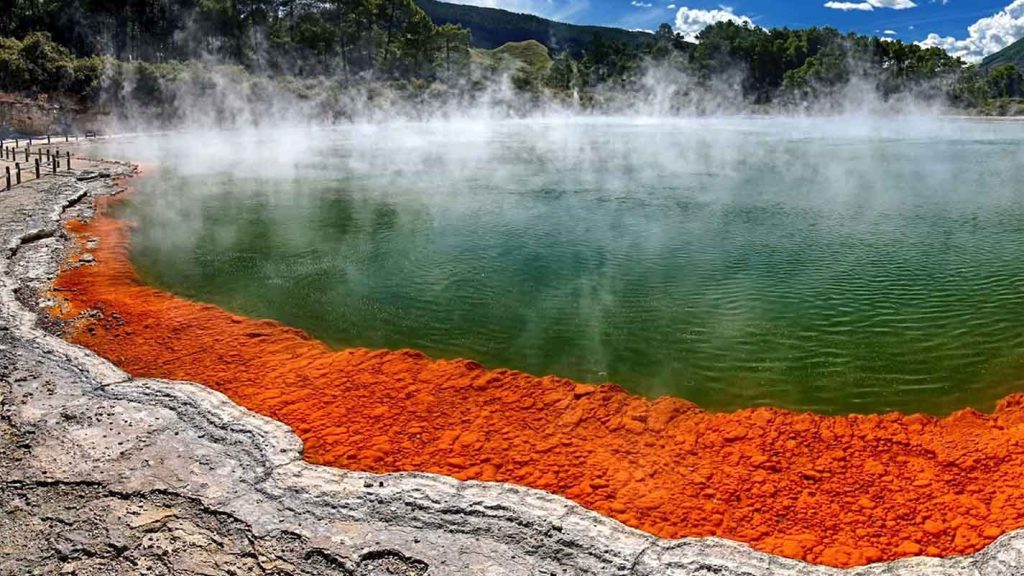
A longer drive brought me to Rotorua — an active geothermal zone that smells unmistakably of sulfur but offers unmatched encounters with Earth’s raw energy. Mud pools bubbled like living things, steam hissed from cracks in the ground, and geysers exploded in regular intervals like breath exhaled from the planet itself.
Wai-O-Tapu Thermal Wonderland lived up to its name. The Champagne Pool shimmered with shades of emerald and orange, while the Devil’s Bath radiated a bright acidic green. I followed wooden walkways that wound through the geothermal field, pausing often to just watch — mesmerized by the unpredictable burps and rumbles beneath my feet.
In the evening, I attended a cultural experience at Te Pā Tū, where Māori traditions, food, and storytelling offered insight into the spiritual bond between the people and the land. The haka performance echoed into the night, voices raised in ancient defiance and pride.
8. Mount Maunganui: Ocean Meets Elevation
On the way back north, I spent a night in Tauranga, with the main destination being Mount Maunganui. I rose before dawn to climb the summit track in time for sunrise. The path wound steadily upward, flanked by wildflowers and the scent of salt carried by the breeze. As I climbed, the horizon began to glow.
At the top, the reward was a panoramic view where the Pacific Ocean kissed the curved bay, and the town below still slept in the early light. The sun lifted slowly, casting golden rays over everything — ocean, land, and the hearts of those who climbed with me. I lingered, not wanting the moment to pass.
Down below, the Mount’s beach stretched for miles, and I walked barefoot along the shoreline, the warm sand clinging to my skin like memory. Cafés opened, and life returned to the town, but I carried the stillness of the summit with me through the rest of the day.
9. Hunua Ranges: Waterfalls and Wilderness
Closer to Auckland, the Hunua Ranges provided a final opportunity to reconnect with the forest. Less crowded than the west coast, the eastern hills felt more intimate. The main walking track led me through groves of towering kahikatea and tōtara trees. Their trunks rose like pillars, and the filtered light dappled the mossy ground in moving patterns.
Hunua Falls, the star of the range, fell from a basalt cliff into a wide, rocky pool. I climbed a trail that led to the top of the waterfall, where I could see the river winding away like a ribbon of silver. Birds called in the canopy above — tui, fantail, kererū — their songs layered over the sound of falling water. I took a long pause here, just to absorb the moment.
10. A Journey Written in Landscapes
Each destination offered something elemental — not merely a change of scenery, but a different expression of New Zealand’s spirit. Water, fire, forest, stone — these are not metaphors here, but literal forces that shape the land and every experience. The drive back to Auckland passed in reflective silence, interrupted only by the occasional view that made me pull over and take one more look.
These places are not just stops on a map — they are chapters in a larger story. A story told by the wind off the Pacific, the hiss of volcanic steam, the quiet of ancient forests, and the distant roar of surf meeting rock. There is nothing passive about New Zealand’s landscapes — they demand presence, reward patience, and transform perspective.
And though the road always leads back to the city, its curves and detours leave a lasting echo of what waits just beyond the skyline.